

The best way to teach a seven-year-old French is through audio-visual aids. Telling stories in French, choosing bilingual books and reading them each night can be extremely useful.
French, spoken across five continents and by over 300 million people worldwide, is one of the most valuable languages for young learners to acquire. Children who learn French develop sharper cognitive abilities, enhanced problem-solving skills and greater cultural awareness at an early age. Studies show that bilingual children perform better academically, display improved memory retention, and develop stronger multitasking capabilities.
If you are a parent looking to help your child learn French, you have come to the right place. This English Path guide explores engaging, effective methods that transform language learning from a chore into an adventure. Try these activities and games for yourself and see what works best for your child.
10 fun games to learn French for kids
Games transform learning French for kids into pure enjoyment. Here are some proven activities that make practice feel like playtime.
French Simon Says (Jacques a dit)
This classic game helps children learn vocabulary for body parts, actions and commands.
How to play:
-
- One person becomes 'Jacques' and commands in French.
- Commands must start with 'Jacques a dit' to be valid.
- Try phrases like 'Jacques a dit, touchez votre tête' (touch your head).
- Players who follow commands without 'Jacques a dit' are out.
Skills developed: Listening comprehension, vocabulary retention and following instructions.
French Bingo (Loto)
Bingo makes vocabulary practice exciting and competitive.
How to play:
-
- Create bingo cards with French words or pictures (animals, numbers, food)
- Call out French words
- Children mark the correct word or image
- First to complete a row shouts 'Bingo!'
Skills developed: Word recognition, listening skills and pronunciation.
French memory match
A visual way to build vocabulary through matching games.
How to play:
-
- Create pairs of cards (one with a picture, one with a French word).
- Lay the cards face down in a grid.
- Players flip two cards at a time to find matches.
- The player with the most pairs wins.
Skills developed: Memory retention, word-picture association and concentration.
Want your child to learn French?
Explore EP coursesFrench treasure hunt (Chasse au trésor)
Turn vocabulary practice into an adventure in your home.
How to play:
-
- Hide objects around the house.
- Give children a list of items in French.
- They search for items and say their French names when found.
- First to find everything wins a small prize.
Skills developed: Vocabulary recall, reading and speaking with confidence.
I Spy (Je vois)
Perfect for practicing colours and everyday objects.
How to play:
-
- One player says "Je vois quelque chose de [colour]"
- Others guess the object using French words
- The correct guesser takes the next turn
Skills developed: Observation, colour recognition and vocabulary expansion.
French charades
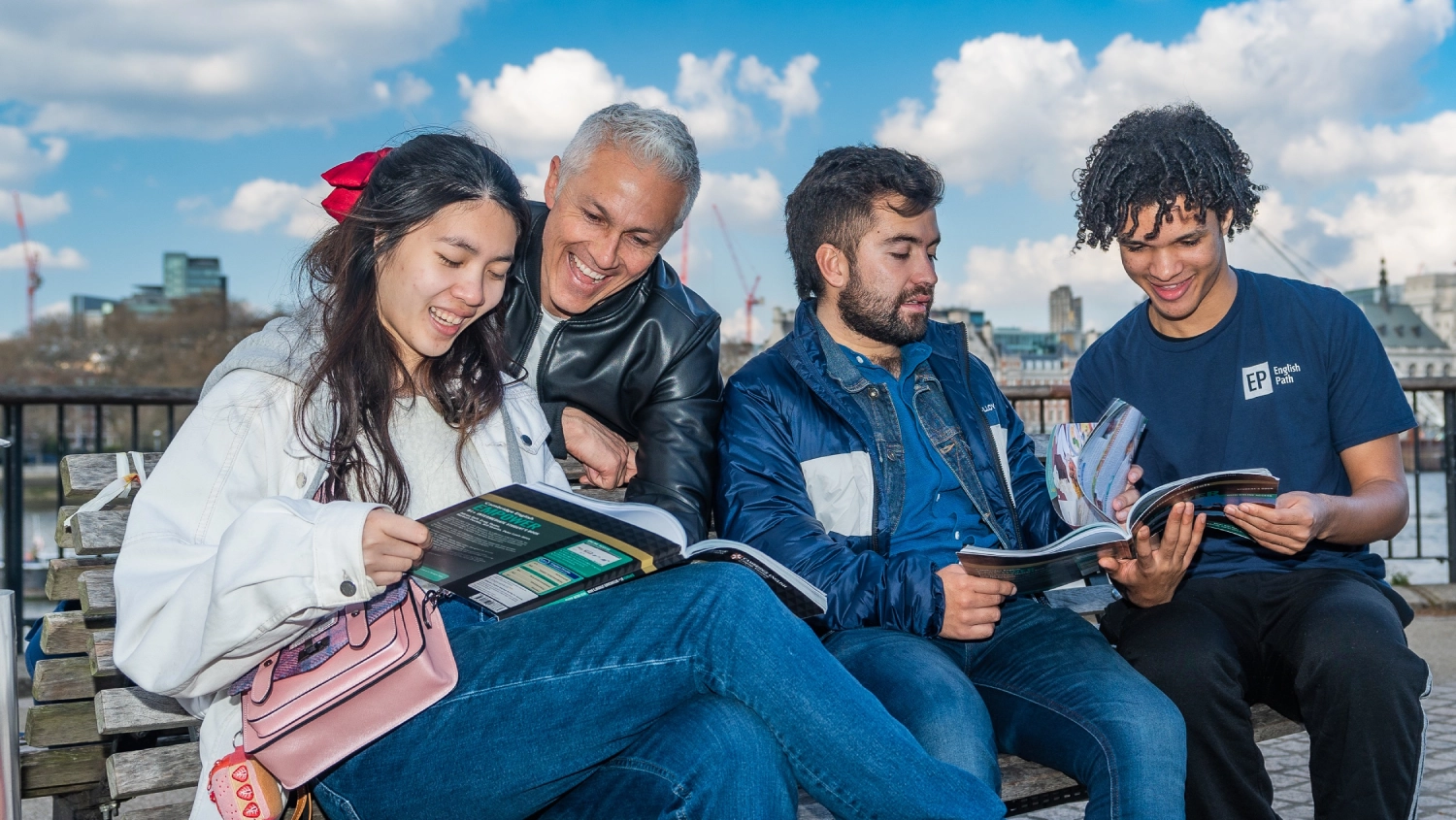
This physical game builds confidence in expressing French words.
How to play:
-
- Write French words or phrases on paper slips.
- One player acts out the word without speaking.
- Others guess the word in French.
- Rotate so everyone gets a turn.
Skills developed: Word association, comprehension and confidence building.
French shopping roleplay
Practise real-life conversations through pretend shopping.
How to play:
-
- Set up a pretend shop with items labelled in French.
- One child is a shopkeeper, others are customers.
- Customers request items: 'Je voudrais une pomme, s'il vous plaît'.
- Shopkeeper responds in French and provides the item
Skills developed: Conversational French, vocabulary and pronunciation.
Storytelling with pictures
Encourage creativity whilst building language skills.
How to play:
-
- Show children a picture or a sequence of images
- Ask them to create a story in French
- Each person adds a sentence to build the story
- Record their stories to track progress
Skills developed: Sentence formation, speaking fluency and imagination.
French card games
Traditional card games adapted for language learning.
Options to try:
-
- French Snap (matching French words)
- Go Fish with French vocabulary
- French Uno with colour and number practice
Skills developed: Quick thinking, vocabulary recall, competitive motivation
Guess the word (Devine le mot)
This guessing game builds vocabulary and critical thinking.
How to play:
-
- Write the French words on the cards
- One player holds a card to their forehead without looking
- Others give clues in French
- Player guesses until correct or time runs out
Skills developed: Speaking practice, listening comprehension and deductive reasoning.
Why learning French for young learners matters
French serves as an official language in 29 countries and remains a key language in international diplomacy, business and culture. For children between eight and 12 years old, this age represents a golden window for language acquisition.
Key benefits include:
-
- Enhanced brain adaptability to absorb new sounds and grammar
- Improved cognitive skills and problem-solving abilities
- Better performance in other academic subjects
- Increased cultural awareness and empathy
- Greater career opportunities in the future
The beauty of fun French learning for kids lies in making the process natural rather than forced. Children at this age respond brilliantly to interactive, playful approaches that don't feel like traditional studying.
Building vocabulary systematically
Rather than random vocabulary learning, thematic groupings help children build connected knowledge.
| Theme | Sample vocabulary | Fun activity |
|---|---|---|
| Family | Mère, père, frère, sœur, grandmère | Create a family tree with French labels |
| Animals | Chat, chien, oiseau, poisson, lapin | Visit a zoo and name animals in French |
| Colours | Rouge, bleu, vert, jaune, rose | Paint a picture describing colours used |
| Food | Pain, fromage, pomme, eau, chocolat | Plan a French-themed picnic |
| School | Livre, stylo, cahier, professeur | Label school supplies in French |
| Weather | Soleil, pluie, neige, nuages | Create a daily weather chart |
| Numbers | Un, deux, trois, quatre, cinq | Play hopscotch with French numbers |
Tips for vocabulary retention:
-
- Focus on one theme per week
- Use new words immediately in sentences
- Review previous themes monthly
- Create flashcards with pictures
- Practice in everyday situations
Expert suggestion from English Path: Connect French to your child's existing interests. Football fans can learn French football vocabulary and watch Ligue 1 matches. Book enthusiasts might enjoy French comics. Animal lovers can learn about French wildlife whilst practicing vocabulary.
Fun French learning for kids works best when combining enjoyable home activities with professional guidance. Your support and encouragement matter a great deal. Every French word you celebrate, every mistake you help them learn from, and every moment you show interest in their progress builds their confidence and capabilities.
The role of professional French education
Whilst home support remains invaluable, professional instruction provides structure and expertise that accelerate learning. Structured classes have numerous benefits including qualified teachers to assess your child's level accurately, regular progress tracking and feedback and peer interactions.
English Path specialises in creating engaging French programmes for children that combine professional instruction with fun, interactive approaches young learners need. Teachers bring both linguistic expertise and child education training, understanding how to make classes effective and enjoyable.
FAQs about French learning for kids
What are the best ways to teach a seven-year-old French?
What are the best ways to learn French for kids aged eight to 12?
The best ways to learn French for kids include interactive games like Jacques a dit and French Bingo, daily activities such as labelling household items, watching French cartoons and enrolling in structured classes. Fun French learning for kids works best when combining home practice with professional guidance from courses like English Path.
What French vocabulary should beginners learn first?
Start with practical, high-frequency words: greetings (bonjour, au revoir), family members (mère, père), numbers (un, deux, trois), colours (rouge, bleu), common objects (chien, chat) and basic phrases (s'il vous plaît, merci). Build thematically for better retention.
What's the difference between learning French at home vs. in classes?
Home learning provides flexibility and personalised pacing, whilst professional classes offer a structured curriculum, qualified teachers and peer interaction. The most effective approach combines both regular classes supplemented by fun home practice.
At what age should children start learning French?
Children can begin learning French as early as 3-4 years old, but ages 8-12 represent an ideal window. At this stage, children have developed reading skills in their native language whilst still possessing the brain plasticity that makes language acquisition natural.