

Yes, a month abroad is often life-changing. It helps you grow personally, become more independent and gain global exposure. You also build friendships and experiences that stay with you for life.
People say friendship happens naturally and it’s true. But what about when you are in a completely new environment, when everything feels alien and you don’t know anyone? One of the most challenging parts of living and studying abroad is making genuine friendships.
As shared by our students at EP, what has really helped them is the small, real-life stuff; a shared dinner, a city walk, meeting someone who explains how things actually work. You don’t need 100 new contacts; you just need two or three real ones.
In this blog, we will share real insights from our students that have helped them find friends for life. These simple tips can help you build meaningful connections and feel more at home in a new environment.
Key tips for making friends abroad
Building friendships abroad takes effort. Everyone around you is in the same boat and you just need to take that first step to approach and talk to them. If you are hesitant and don’t know what to do, here are seven practical ways to build lasting friendships whilst studying abroad:
Participate actively in class activities
Your classroom is your first social space. Do not just sit and listen; get involved. Speak up. Ask questions. Help classmates with tasks. The following are some ways to achieve this:
-
- Volunteer for group projects and presentations.
- Sit with different classmates each day.
- Ask for help; it opens doors to friendship.
- Participate in class activities.
- Stay back after class to chat.
When you participate actively, people notice. Naturally, conversations begin. This is one of the easiest ways to build communication skills while making real connections.
Join excursions and activities organised by the school
Taking part in activities organised by your school is one of the best ways to meet new people and feel more connected. Participating regularly helps you interact with peers in a natural setting, making conversations easier and friendships more likely to develop.
You can make the most of these opportunities by:
-
- Attending workshops, cultural events and school-organised programmes
- Volunteering for group activities or student initiatives
- Staying consistent and showing up regularly to build familiarity
- Being open to conversations and connecting with new people
- Taking initiative and getting involved whenever possible
In fact, many higher education institutions around the world also have Students’ Unions, which organise events, represent student voices and create opportunities for engagement.
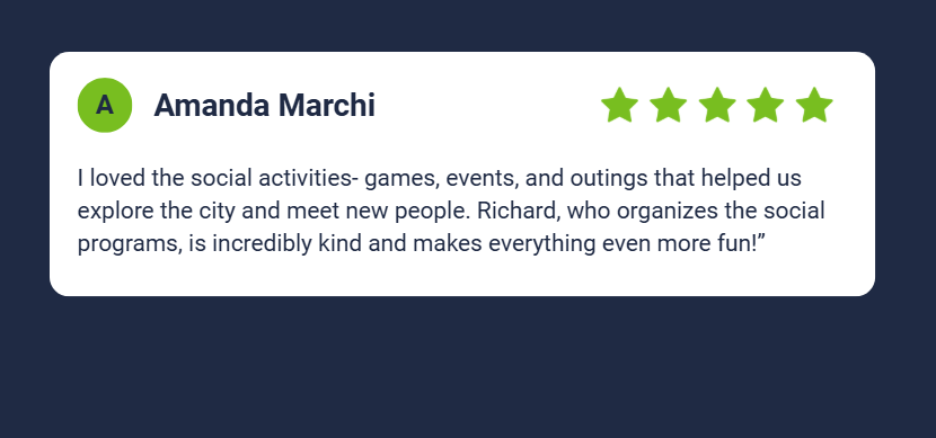
Amanda Marchi, a student at English Path Brisbane, shared her experience-
Embrace cultural exchange
One of the best parts of living and studying abroad is meeting people from different cultures. Don't shy away from it, dive in. Share things about your culture, talk about how things are different in your home country and in your study destination. You can:
-
- Make a dish from your home country and share it others.
- Learn a few words in a classmate's language.
- Attend cultural events and celebrations on campus.
- Ask about their traditions, festivals and daily lives back home.
- Celebrate important festivals together, even in small ways.
This is the best conversation starter; people love to talk about their culture and life back at home. It helps break the ice and creates a sense of comfort, making both of you feel seen, heard and more connected.
Utilise social media and networking
Before you arrive, use social media to connect. Social skills can be practiced online too. Introduce yourself, ask questions, join the conversation. Often, these connections lead to real-life friendships.
-
- Use LinkedIn to connect with fellow students and alumni.
- Follow your school's social media accounts to stay updated on events.
- Comment on posts and engage with others regularly.
- Reach out to classmates before your course begins and introduce yourself.
Starting online makes the first in-person interaction feel much easier and more familiar. Sometimes, a simple message is all it takes to turn a stranger into someone you feel comfortable meeting on your first day.
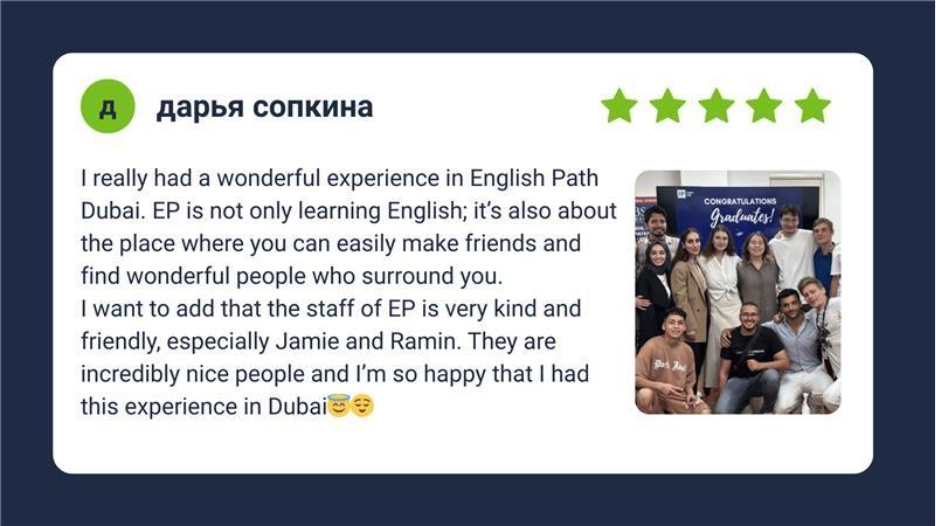
A student дарья сопкина at EP Dubai shared-
Live in student accommodation
If you have the choice, live in student accommodation. Student houses and shared flats are brilliant for meeting people. You will bump into people every single day – in the kitchen, the common room, the corridors. These casual moments turn into friendships faster than you think.
-
- Keep your door open sometimes; it signals you are approachable.
- Be a good housemate; it goes a long way.
- Spend time in shared spaces instead of staying in your room.
- Join at group meals or casual hangouts whenever possible.
At English Path, your accommodation is a big part of your experience when studying abroad. We offer a range of affordable student accommodation options to suit different needs. Our accommodation managers are there to help you arrange your stay and support you during your studies.
Attend social events
Schools and universities regularly host social events, including welcome parties, movie nights, game evenings and cultural festivals. Visit them all – each and every one. Even if you feel nervous, push yourself to attend. You do not have to be the loudest person in the room. Showing up is half the battle. Eventually, you will find your tribe.
Maria Jesus Garcia, an EP student, shared her experience: “EP organised plenty of social events to help me and other students get to know the city. The teachers are not only highly qualified but also genuinely engaged in students’ interests and progress. EP Leeds goes beyond just teaching, it has been a wonderful experience.”
Spend less time in your room alone
This one is simple but powerful. The more time you spend outside your room, the more people you meet. It is easy to retreat to your room and scroll through your phone. However, friendships are built face-to-face. Make a habit of being present and available.
-
- Study in common areas like the library or the student lounge.
- Eat meals with others rather than alone in your room.
- Explore the local area; cafes, parks, markets.
- Say yes to invitations, even if you feel shy at first.
- Create small daily routines, like getting coffee at the same place.
The more visible and open you are, the more opportunities you create for connection. Friendships begin with simple, everyday moment.
Why is it important to make friends while studying abroad?
It is not just about having fun – although that matters too. Building friendships while living abroad as a student has real, lasting benefits for your life and career. It improves:
-
- Mental health: Home sickness is one of the biggest challenges for students abroad. Having friends reduces stress and anxiety.
- Communication skills: Talking to people from different backgrounds makes you a better communicator in any setting.
- Social skills: Understanding different personalities and cultures develops confidence and emotional intelligence.
- Network: The friends you make abroad often become professional contacts, collaborators and lifelong connections.
- Overall study experience: Sharing adventures, exploring new places and experiencing student social life together make your time abroad truly memorable.
Your time spent studying abroad is limited. Make the most of every moment. Put yourself out there. Say yes to new things. And remember, everyone is looking for a connection, just like you are. The friendships you develop while living and studying abroad may well become the most meaningful of your life.
Become part of a welcoming international community
Epic ExperienceFAQs about Living abroad as a student
How to make friends while studying abroad?
Start by joining student clubs, attending social events and spending time in shared spaces. Be open to conversations and show interest in other people’s cultures and experiences. Even small efforts can lead to meaningful friendships.
Is it difficult to make friends while studying abroad?
It can feel challenging at first because everything is new. However, most students are in the same situation and looking to connect. With time, consistency and openness, friendships develop naturally.
What are the five core social skills?
The five core social skills include communication, active listening, empathy, teamwork and adaptability. These skills help you connect with people, understand different perspectives and build strong relationships.
How to have a social life as an international student?
Participate in campus activities, explore the city and stay connected with your classmates. Try to balance academics with social experiences.